

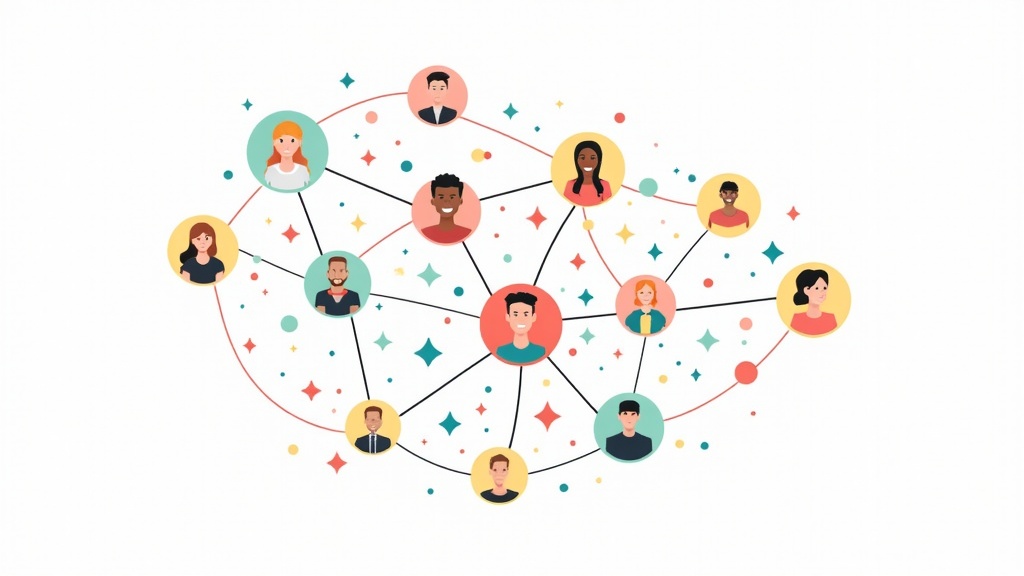
Key Takeaway: Finding your niche audience isn’t about chasing numbers; it’s about connecting with people who actually care. When you focus on the right community, engagement grows naturally, and your message finally starts to stick.
Estimated reading time: 9 minutes
Finding your niche audience on social media feels simple until you actually sit down to do it. Then it hits you, there are millions of people out there, each with their own thing going on.
When I first started, I thought my content was for everyone. I discovered that this was a significant mistake. Talking to everyone is basically talking to no one. You end up shouting into the wind, you make lots of noise, but there’s no connection.
Here’s how I finally figured out who my real audience was, how to reach them without overthinking it, and how to build a space where what you say actually sticks.
- What Does Finding Your Niche Audience Mean?
- Why Is Identifying a Niche Audience So Important?
- Steps to Find and Grow Your Niche Audience
- Where Can You Find Your Niche Audience?
- Some Tips for Building a Loyal Niche Community
- Common Mistakes to Dodge When Finding Your Niche Audience
- Wrapping Up: Finding Your Niche Audience Takes Time
- FAQ Finding Your Niche Audience
What Does Finding Your Niche Audience Mean?
Finding your niche audience on social media isn’t about chasing followers or hopping on trends. It’s about connecting with the people who actually get what you’re saying. The ones who share your interests, your problems, maybe even your sense of humor.
These are the people who stick around because your content speaks to them. So instead of throwing posts into the void and hoping someone bites, you start creating what your people actually want to see. That’s where real engagement begins.
Your niche audience could be fans of hand-poured candles, cycling enthusiasts, indie game creators, eco-friendly parents, or anyone at the intersection of certain interests and values. The key is spotting that intersection and focusing your efforts there.
Why Is Identifying a Niche Audience So Important?
It’s tempting to want your social media posts, videos, or stories to reach thousands, or even millions. But mass appeal isn’t always the best route, especially at the start. Here’s why zooming in on a specific audience works so well:
- More meaningful engagement. When you talk directly to a community about their specific needs or interests, they’re far more likely to comment, share, and get involved.
- Easier to stand out. By creating content that no one else is delivering to your chosen group, you can quickly set yourself apart from the noise of generic posts.
- Better word-of-mouth. Tight communities spread the word more easily. If your content “gets” them, they’ll bring their friends into the fold.
- Increased loyalty. A small group of true fans is often a better foundation for growth than thousands of passive viewers.
Additionally, most successful creators and brands begin with a focused approach before expanding their reach. Going niche first is the fast track for growing authentically.
Steps to Find and Grow Your Niche Audience
1. Spell Out Your Unique Angle
Start by checking out your own interests, expertise, and the problems you want to help solve. What makes your viewpoint unique? Write down what you’re passionate about, as well as any unusual skills, backgrounds, or perspectives you can bring. Then, look for overlaps between what you care about and what other people are actively searching for or discussing online. Forums, comment sections, and social groups are great sources for this type of info. When you tap into an active conversation, you become much more relevant from the start.
2. Audience Research: Who Are Your People?
Once you have an idea of your niche, it’s time to get a clear picture of who’s already there. Research all-in-one:
- What are their interests and values?
- What challenges or pain points do they face?
- What platforms do they use, and at what time?
- What brands, influencers, or hashtags do they already follow?
You can size up existing communities on Reddit, Facebook Groups, Twitter, Instagram hashtags, and YouTube comments. Don’t just look at numbers; get a feel for the vibe and energy of each space. Those details will help you shape your content and voice.
3. Create Content That Feels Personal
Generic, one-size-fits-all content rarely gets attention from a focused audience. Instead, make content for your niche that speaks directly to their desires, dreams, and challenges. Use language, references, jokes, and visuals that make your people feel seen. You want your content to pop up in their feed and have them think, “Hey, this was made for me!”
Try out different content types, such as stories, Q&A sessions, tutorials, memes, or quick tips, and pick the formats that your community enjoys most. Video works wonders for connecting on a human level, but don’t underestimate a well-crafted tweet or cool image, either.
4. Interact and Jump Into Conversations
Social media isn’t just about broadcasting your message; it’s about building real connections. Check in with your followers, answer their questions, and reply to their comments. Hanging out in the comment section can give you priceless insights into what your audience loves or wants more of. Plus, the more you show up as a real person, the easier it is to build trust and loyalty.
Jump into existing conversations around your niche on other people’s posts, forums, or live streams. Don’t just drop links, add value, and show you’re genuinely a part of the community. To be honest, the less you include links, the more the platform starts to trust you. If you add a link to every post, you can be seen as a spammer and catch a shadow ban.
5. Use Data to Fine-Tune Your Game Plan
All major social platforms offer analytics, and it’s worth reviewing those numbers regularly. Keep an eye on what’s working: Which posts get the most engagement? When is your audience most active? What topics do they care about? Use that data to move faster. Double down on what’s working, and if something’s falling flat, change it. No hesitation.
Feedback can go beyond numbers. Ask questions in your stories or polls, or invite your followers to share what they want to see more of. Listening actively helps you tweak your game plan in real-time.
Where Can You Find Your Niche Audience?
Not all social media platforms are created equal, especially when you’re after a specific group. For example, visual audiences might gather on Instagram or Pinterest, while writers and thinkers often hang out on Twitter or LinkedIn. Gamers love Twitch and Discord, while crafters and DIY enthusiasts are strong on Reddit and Facebook Groups.
The trick is to do some sleuthing. Search for hashtags, look up keywords, and check out where your favorite similar creators are most active. You can also jump into active group chats, subreddits, and even email communities (newsletters often have tight-knit audiences). Wherever your people like to spend time, show up and start a conversation.
Some Tips for Building a Loyal Niche Community
- Be consistent. Show up regularly. Whether it’s daily stories, weekly videos, or monthly live Q&As, your people will know when they can find you.
- Remember, quality beats quantity. Better to have a few posts that really connect than a flood of generic, forgettable ones.
- Feature your community. Share user-generated content, highlight followers, or shout out to other voices in your space.
- Stay authentic. No need to pretend to be part of a niche if it isn’t really you. People can spot fake enthusiasm from a mile away.
- Make it easy for newcomers. Have a clear intro or pinned post for those stumbling upon your page for the first time. Show what your space is all about up front.
Common Mistakes to Dodge When Finding Your Niche Audience
Building your niche the right way means side-stepping a few common pitfalls:
- Trying to please everyone. You’ll end up pleasing no one, and your content becomes watered down.
- Not listening to feedback. Your community can guide you, but only if you’re open to what they have to say.
- Ignoring analytics. It’s easy to get caught up in making more, but checking your numbers helps you see what’s actually working.
- Changing your voice to fit in. It’s good to adapt, but always keep your personality at the forefront.
- Neglecting to set clear goals. Know what success looks like: is it engagement, followers, sales, or something else?
Wrapping Up: Finding Your Niche Audience Takes Time
Bottom line, finding your niche audience is less about chasing numbers and more about building real relationships with people who care about what you do. It won’t always be quick or easy, but as you zero in on your community, the benefits start to pay off. You’ll feel the shift as your engagement grows, your message becomes clearer, and your followers start to talk back and bring their friends. Stay patient, keep experimenting, and track down the people who make your work worthwhile. Eventually, you’ll have a community that not only gets your message but also helps it spread even further.
FAQ Finding Your Niche Audience
Short, direct answers to the questions I get most about dialing in a niche on social.
-
What does “niche audience” really mean?
A focused group of people who share specific interests or problems that you can speak to well. Not “everyone.” Your people. -
How do I know if I picked the right niche?
You see steady engagement from the same type of person, DMs with specific questions, and saves/shares on focused posts. If it’s crickets, refine. -
Where do I research my audience?
Check Reddit threads, FB Groups, YouTube comments, TikTok search, IG hashtags, and Quora. Read complaints, wish lists, and “I tried X but…” posts. -
What should I post to test a niche?
Post three quick wins, one how-to, one myth buster, and one story with a lesson. Track saves, comments, and replies. Repeat what lands. -
How narrow is too narrow?
If you run out of useful post ideas in a week, it’s too tight. Aim for one core problem with 5–7 subtopics you can cycle through. -
Do I need to be on every platform?
No. Pick one primary and one secondary where your audience already hangs out. Master those. Repurpose later. -
How often should I post?
Consistently. For most niches: 3–5 feed posts a week, daily stories, one live or long-form piece weekly. Keep it sustainable. -
What metrics matter most?
Saves, shares, comments, replies, and DMs. Watch completion rate on video, and link clicks when you pitch. Vanity reach can wait. -
What if a post flops?
Cut it, tweak the hook, try a tighter example, and post again. Use data to move faster. Double down on what works. Change what doesn’t.
Tip: Keep a running list of audience phrases from comments and DMs. Use their words in your hooks.